

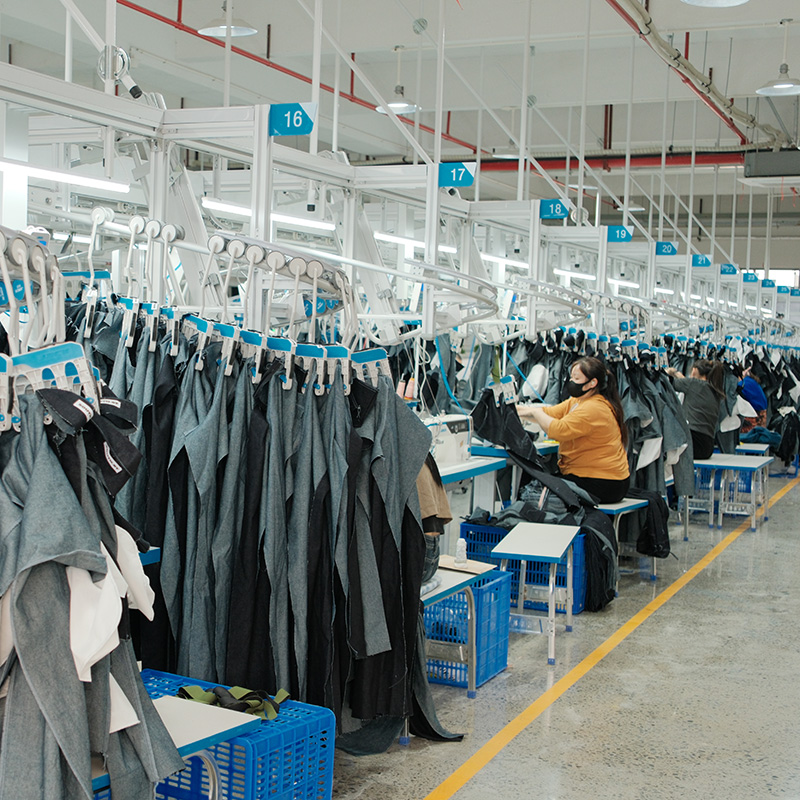
Research Note: How Streetwear Brands Vet Manufacturers Before Committing to Volume?
So, you’ve got the designs that could define the next wave of streetwear. That’s the heart of your brand, but the circulatory system—the thing that keeps it alive and pumping—is your supply chain. We’ve seen countless brands with killer concepts stumble, not because their vision was flawed, but because their production fell apart. They chose the wrong manufacturing partner, and it led to a cascade of costly delays, inconsistent quality, and ultimately, a loss of trust with their customers. This isn’t just about finding a factory; it’s about finding a partner that can translate your vision into a tangible, high-quality product, collection after collection.
This research note is for brand owners standing at that critical juncture. It’s not another generic checklist. We’re going to walk you through the decision-making framework that seasoned brands use to vet manufacturers before they even think about committing to a full production run. We’ll break down the real-world trade-offs between cost, quality, and speed, and give you a playbook to de-risk one of the most significant decisions you’ll make. Think of this as the conversation you’d have with a supply chain veteran over coffee—straightforward, practical, and focused on what actually moves the needle.
Why Your Manufacturer Vetting Process is Your Brand’s Most Critical Decision
Choosing the right manufacturing partner is the single most important operational decision a streetwear brand will make, directly impacting product quality, brand reputation, and long-term financial viability. A rigorous vetting process mitigates risks like production delays, inconsistent quality, and hidden costs, transforming the supply chain from a potential liability into a competitive advantage that enables sustainable growth and scalability.
Let’s be direct: your manufacturer is a co-creator of your brand’s physical identity. A great partner does more than just cut and sew; they provide critical feedback on your designs, help you navigate complex material sourcing, and ensure every piece that reaches your customers meets the standard you’ve promised. The global streetwear market is projected to hit over $370 billion in 2025 , and in a market that crowded, your product’s quality is your most powerful differentiator. A flawed vetting process, on the other hand, can lock you into a partnership that drains your resources and damages your reputation before you’ve even had a chance to scale.
Consider the real-world stakes. A production run with inconsistent sizing or flawed printing doesn’t just cost you money in returns; it erodes the trust of your community. Negative reviews and social media call-outs can be devastating for an emerging brand. Conversely, a solid manufacturing relationship allows you to build a reputation for reliability and quality. It gives you the confidence to plan ambitious collections, knowing your partner can execute them flawlessly. This is why treating the vetting process as a strategic priority, rather than a logistical hurdle, is fundamental to building a brand that lasts.
The Pre-Vetting Framework: Defining Your Core Production Needs
Before you can find the right partner, you must first create a detailed production blueprint that clearly defines your brand’s specific needs regarding quality, design complexity, order quantity, and target cost. This internal alignment acts as a filter, immediately disqualifying unsuitable factories and allowing you to engage potential partners with a professional, well-defined project scope.
Walking into a conversation with a potential manufacturer without a clear plan is like trying to navigate a new city without a map. You’ll waste time, look unprofessional, and likely end up in the wrong place. The first step in the vetting process is always internal. You need to sit down and create a detailed checklist that outlines exactly what you’re looking for. This isn’t just about your designs; it’s about the operational and financial realities of your business.
This pre-vetting framework forces you to make key decisions upfront and ensures you’re comparing potential partners on a level playing field. It becomes the foundation for your tech packs and your initial outreach emails, signaling to factories that you are a serious, organized brand worth their attention. Here’s how to break it down:
| Key Area | Questions to Answer | Strategic Importance |
| Quality & Material | What is your desired quality level: premium, mid-tier, or entry-level? What specific fabrics (e.g., 400 GSM heavyweight French terry, organic cotton) are non-negotiable? | This is the most fundamental aspect of your product. It dictates the type of factory you should be looking for. A factory specializing in fast fashion is not the right fit for a premium, built-to-last garment. |
| Design Complexity | Do your designs involve simple screen prints, or do they require complex techniques like puff prints, custom embroidery, garment dyeing, or intricate cut-and-sew construction? | The more complex your designs, the more specialized your manufacturing partner needs to be. A factory’s capabilities must match your creative ambition. |
| Minimum Order Quantity (MOQ) | What is the realistic number of units you can commit to per design and color? Are you testing the market with a small batch or launching a full collection? | MOQs for growth-focused streetwear brands typically range from 50-150 units per style . Being honest about your capacity prevents you from wasting time with factories whose minimums (often 500-1000+ units) are too high. |
| Target Cost Per Unit | Based on your retail price and desired margin, what is the maximum cost you can afford per garment? | This is your financial guardrail. Having a clear target cost helps you quickly filter out factories that are out of your budget, and it provides a starting point for negotiation. |
Domestic vs. Overseas: A Strategic Cost-Benefit Analysis for 2026
The choice between domestic and overseas manufacturing is a strategic trade-off between speed and cost, with domestic production offering faster turnarounds and easier oversight, while overseas partners provide significantly lower unit costs. A thorough analysis of your brand’s priorities—speed-to-market, budget constraints, and hands-on involvement—is essential to determine the right sourcing strategy for your specific needs.
This is one of the biggest decisions you’ll make, and there’s no single right answer. The best choice depends entirely on your brand’s specific circumstances. A brand focused on rapid, trend-responsive drops might prioritize the speed of a local manufacturer, while a brand competing on price may find the cost savings of an overseas partner essential for survival. Let’s break down the practical differences you can expect in 2026.
Working with a domestic factory in the US or UK means you’re in the same time zone, you can easily visit the facility, and shipping is faster and cheaper. This proximity is invaluable for quality control and building a close working relationship. However, this convenience comes at a premium, with significantly higher labor costs translating to a higher cost per unit. Conversely, manufacturing hubs like China, Vietnam, and Portugal offer much lower production costs, making your products more price-competitive. The trade-off is longer shipping times (ocean freight from Asia to the US can take 25-35 days ), potential communication barriers, and the challenge of managing quality control from a distance.
| Factor | Domestic Manufacturing (e.g., USA, UK) | Overseas Manufacturing (e.g., China, Portugal) |
| Cost Per Unit | Higher | Lower |
| Turnaround Time | Faster (typically 6-8 weeks for small batches) | Faster (4-8 weeks production) + Slower(4-5 weeks shipping) |
| Quality Control | Easy to visit the factory and inspect production in person. | Relies heavily on detailed tech packs, photos, video calls, and samples. |
| MOQ | Often lower, which aligns better with premium streetwear labels and design-led brands that run frequent sampling and testing cycles. | Often lower, many factories now cater to emerging brands. |
The 5-Step Vetting Playbook: From Initial Outreach to Final Commitment
A systematic five-step vetting process—encompassing professional outreach, response evaluation, due diligence, rigorous sample review, and transparent negotiation—is crucial for de-risking your choice of a manufacturing partner. This structured approach ensures that you are not only evaluating a factory’s production quality but also its communication, reliability, and overall professionalism before committing to a bulk order.
Once you have a shortlist of potential manufacturers, it’s time to move from research to engagement. This is where you separate the contenders from the pretenders. Each step is designed to give you a clearer picture of who you’re dealing with. Rushing this process or skipping steps is the fastest way to end up with a partner who over-promises and under-delivers.
This playbook is your roadmap to making an informed, confident decision. It’s a methodical process that moves from a broad inquiry to a detailed, hands-on assessment. Remember, you are interviewing them for a critical role in your company. Pay close attention to not just what they say, but how they say it. Their communication style during this phase is often a direct reflection of how they’ll operate once you’re a client.
- Initial Outreach & Tech Pack Submission: Your first email should be professional, concise, and comprehensive. Introduce your brand, briefly describe your project, and, most importantly, attach a detailed tech pack. A professional tech pack signals that you are serious and organized, and it gives the factory all the information they need to provide an accurate quote. Vague inquiries get vague, slow responses.
- Evaluate the Response: This is your first real test of the partnership. How quickly did they respond? Was the response clear, professional, and in good English? Did they ask intelligent questions about your project, or did they just send a generic price list? A great potential partner will engage with your designs and might even offer initial feedback. Slow, sloppy, or evasive communication is a major red flag.
- Request Key Information & Due Diligence: Before you invest in samples, do your homework. Ask for their certifications they hold (like WRAP or SMETA), and references from other brands they’ve worked with (preferably in your niche). A legitimate, confident factory will have no problem providing this information. Also, ask for photos or a video tour of their facility to get a sense of their scale and organization.
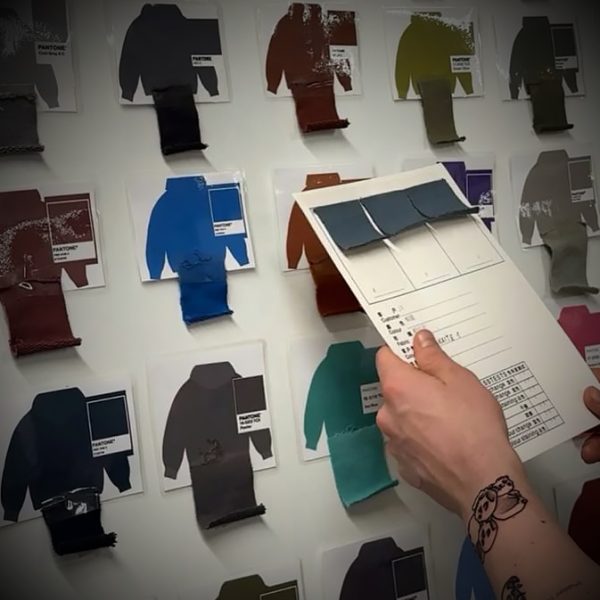
- Order & Meticulously Review Samples: Never, ever skip this step. The sample is the single most important piece of evidence you will have. The cost of a sample (often 3-4times the bulk unit price) is a small investment to avoid a disastrous bulk order. When the sample arrives, be ruthless in your evaluation. Check the stitching, fabric feel, color accuracy, print quality, and measurements against your tech pack. Is the quality what you expected? Is the construction clean? This is your one chance to approve the final product in physical form.
5.Final Negotiation & Terms: If the sample is perfect, you’re ready to talk business. Finalize the price per unit for your bulk order. Crucially, confirm the payment terms. The industry standard is a 30-50% deposit to begin production, with the remaining balance due upon completion or shipment. Be extremely wary of any factory demanding 100% upfront. Finally, get a firm, written production timeline, from the start date to the ex-factory date.
Red Flags: How to Spot a Problem Manufacturer Before It’s Too Late
Identifying critical red flags—such as poor communication, an unwillingness to provide samples, demands for full upfront payment, or a lack of a verifiable business presence—is a vital risk-management skill. Recognizing these warning signs early in the vetting process allows you to disengage from unreliable or unprofessional factories before you have invested significant time or money.
Just as important as knowing what to look for is knowing what to avoid. Over the years, we’ve seen brands get burned by factories that showed early warning signs they chose to ignore. Trust your gut. If something feels off, it probably is. A bad manufacturing partnership can set your business back months and cost you thousands of dollars. Learning to spot these red flags is a crucial defense mechanism.
These issues often point to deeper problems, such as disorganization, poor quality control, or even financial instability. A professional and reliable factory will operate with transparency and clear communication. Any deviation from that norm should be taken seriously. Here are the most common red flags that should make you pause and reconsider a potential partnership:
- Poor or Inconsistent Communication: This is the number one warning sign. If a factory is slow to respond, provides vague answers, or seems to misunderstand your requirements during the sales process, imagine how difficult it will be to resolve an urgent production issue later on. Clear, prompt, and professional communication is non-negotiable.
- Unwillingness to Provide Samples: A factory that refuses to produce a sample of your design is a factory with something to hide. They are essentially asking you to trust them blindly with your bulk order. A confident, quality-focused manufacturer will always be willing to prove their capabilities through sampling.
- Vague Production Timelines: A professional factory operates on a clear schedule. They should be able to give you a confident estimate for how long production will take. If they are evasive about timelines or give you an answer that seems too good to be true (e.g., “2-3 weeks for 1,000 units”), they are likely disorganized or simply telling you what you want to hear.
- No Verifiable Online Presence or Address: In today’s digital age, a legitimate business has a digital footprint. If you can’t find a professional website, a verifiable address, or any independent reviews or mentions of the factory, proceed with extreme caution. Transparency is a key indicator of trustworthiness.
Conclusion: Your Partner in Growth
Choosing a manufacturer is not a one-off transaction; it’s the beginning of a long-term strategic partnership that will be foundational to your brand’s success. The framework we’ve outlined—from defining your needs and weighing your sourcing options to executing a rigorous vetting playbook—is designed to empower you to make a confident, informed decision. By investing the time and effort into this process now, you mitigate the most significant risks in apparel production and lay the groundwork for a resilient and scalable supply chain.
The right partner will do more than just manufacture your products; they will become an integral part of your growth, enabling you to consistently deliver the quality your customers expect and your brand deserves. For brands looking to navigate this complex landscape, having access to a curated and pre-vetted network of suppliers can be invaluable. A well-researched guide comparing streetwear clothing manufacturer options can serve as an excellent starting point for applying this vetting framework.
Ultimately, the goal is to build a partnership based on trust, transparency, and a shared commitment to quality.
Disclosure: This research note is written by the Groovecolor team. The manufacturer list includes Groovecolor alongside other global suppliers,